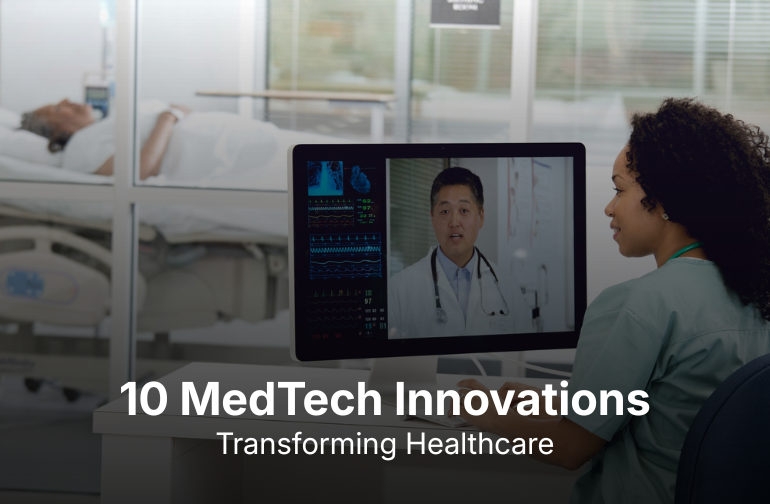






The medical technology (MedTech) landscape is constantly evolving, driven by advances in science and technology and by societal shifts. As we look towards the future, several key trends are poised to shape the way healthcare is delivered and experienced. This MedTech trends outlook will help us to explore the most prominent trends in the healthcare industry. There will be major changes in the medical technology landscape in the upcoming years. These adjustments will have a significant impact on many facets of the tech industry, including reshaping healthcare in the future.
Let’s explore the 10 most prominent MedTech trends together!
Exploring MedTech Trends Outlook: Transformative Path
The MedTech landscape is evolving faster than ever, driven by technological breakthroughs, data innovations, and shifting healthcare needs. As companies and innovators look ahead, several key trends are set to redefine how healthcare is delivered, improving patient outcomes and operational efficiency.
When examining the trends that will define the MedTech trends 2026 and beyond, we must consider the industry’s revolutionary journey. The MedTech industry is expected to grow from its 2020 valuation of $456.9 billion to $800 billion by 2030, indicating a period of significant opportunity and growth. Here’s an updated outlook on the most impactful MedTech trends for 2026.
1. FDA Resource Constraints and Shifting Regulatory Engagement
MedTech innovators are navigating a complex regulatory environment. With FDA resources stretched, companies face longer review cycles and evolving engagement models. Strategic planning and proactive collaboration with regulators are becoming essential for timely product approvals and market entry.
2. Artificial Intelligence in Diagnostics
AI continues to transform diagnostics by enabling faster, more accurate interpretations of medical data. From imaging to lab results, AI-powered tools assist clinicians in early disease detection and decision-making, reducing errors and improving patient care.
3. Personalized Medicine: Tailoring Treatments

Advances in genomics and molecular diagnostics are driving personalized medicine. Treatments are increasingly designed around a patient’s genetic profile, lifestyle, and biomarkers, enhancing efficacy and minimizing adverse effects. MedTech companies are integrating AI and predictive analytics to make tailored therapies more accessible.
4. Wearable Health Technology: Enabling Real-Time Monitoring
Wearables and biometric devices are now central to patient care. From continuous glucose monitors to ECG trackers, these devices allow real-time health monitoring, empowering patients to manage conditions proactively and enabling providers to deliver timely interventions.
5. Generative AI Opportunities in Medtech
Generative artificial intelligence (genAI) is revolutionizing efficiency in healthcare processes. From clinical activity monitoring to diagnostic test interpretation, genAI streamlines tasks, enabling healthcare providers to focus on higher-value activities. Some examples include a visual clinical activity monitoring system that ensures hand hygiene compliance and analyzes vast amounts of patient data to identify patterns that may have been overlooked. GenAI is expected to have significant implications for product manufacturing, aiding in automated development tools for new treatment designs.
6. Continued Rise in Telemedicine and Digital Therapeutics

Telemedicine’s popularity, accelerated by the pandemic, remains unabated. Digital therapeutics, complementing telehealth, are booming. Between 2020 and 2025, the average annual growth rate for digital therapeutics is predicted to be 29.8%, and by 2030, the U.S. telehealth marketplace is expected to reach $309.9 billion. It is anticipated that both markets will be highly lucrative. A study of MedTech leaders provides an exemplary example, as 63% of them believed that digital therapies would have a major effect on the medical device sector over the next ten years.
7. Growing Use of Biometric Technology and Wearables
The popularity of wearable and biometric technology continues to soar. With the global wearable technology market expected to reach $161 billion by 2033, these devices empower consumers to manage their health. From mainstream wearable tech like Fitbits and Apple Watches to niche ECG, PPG, and sweat sensors, these devices have the distinctive ability to empower consumers and patients to manage their health. The healthcare areas leading wearable adoption include audiology, health science, nursing, occupational therapy, pharmacy, and physical therapy.
8. Innovation in AI-driven Medical Devices
In addition to generative AI, there is a surge in innovation around AI-driven medical devices. These devices leverage machine learning algorithms to analyze complex medical data, enhancing diagnostic accuracy and treatment efficacy. For instance, AI-powered imaging devices can precisely interpret medical images, helping healthcare experts make informed decisions.
9. Personalized Medicine Advancements
Advancements in genetic research and molecular diagnostics are propelling the field of personalized medicine. MedTech increasingly tailors treatments to individual patients based on their genetic makeup, lifestyle, and other factors. This approach improves treatment outcomes and minimizes adverse effects, marking a paradigm shift in healthcare toward more personalized, targeted interventions.
10. Integration of Blockchain in MedTech
Blockchain technology is finding applications in MedTech, particularly in enhancing data security and interoperability. From patient records to the medical device supply chain, it ensures the accuracy and tracking of medical data. The need for a transparent and secure system to handle sensitive health information has been recognized by the healthcare sector, which is why this trend has gained traction.
System Integration and Data Interoperability
Connected healthcare devices are only as powerful as the data they share. MedTech companies are prioritizing system integration and interoperability, ensuring devices, EMRs, and analytics platforms communicate seamlessly. This trend supports precision medicine, improves care coordination, and unlocks the value of healthcare data.
MedTech Trends Outlook In A Nutshell
The MedTech Trends Outlook illuminates the transformative path ahead with ten impactful trends, from expanding MedTech companies to integrating blockchain. MedTech is a shining example of progress that improves patient outcomes and overcomes obstacles head-on, especially in the COVID-19 era. The industry projects favorable valuations, steady growth, and significant macro trends beyond 2024, underscoring the need for MedTech companies to develop long-term plans amid increased investor interest and shifting market conditions.
FAQs
Q: What is the significance of the MedTech Trends Outlook beyond 2026?
MedTech Trends Outlook beyond 2026 is crucial as it forecasts transformative trends shaping the MedTech landscape. It provides insights into the industry’s future, from expanding companies to sustainable practices.
Q: How does MedTech Trends Outlook contribute to healthcare equity?
MedTech Trends Outlook addresses healthcare disparities by promoting digital solutions and wearables, fostering greater equity in healthcare access.
Q: What role does innovation play in the MedTech industry according to the Trends Outlook?
MedTech Trends Outlook emphasizes innovation, showcasing advancements like generative AI, telemedicine, and wearables, driving the industry forward.
Q: How can MedTech companies prepare for the future outlined in the Trends Outlook?
MedTech Trends Outlook signals the need for MedTech firms to sustain innovation, align with sustainability goals, and navigate evolving industry dynamics to ensure lasting success.